Product Overview
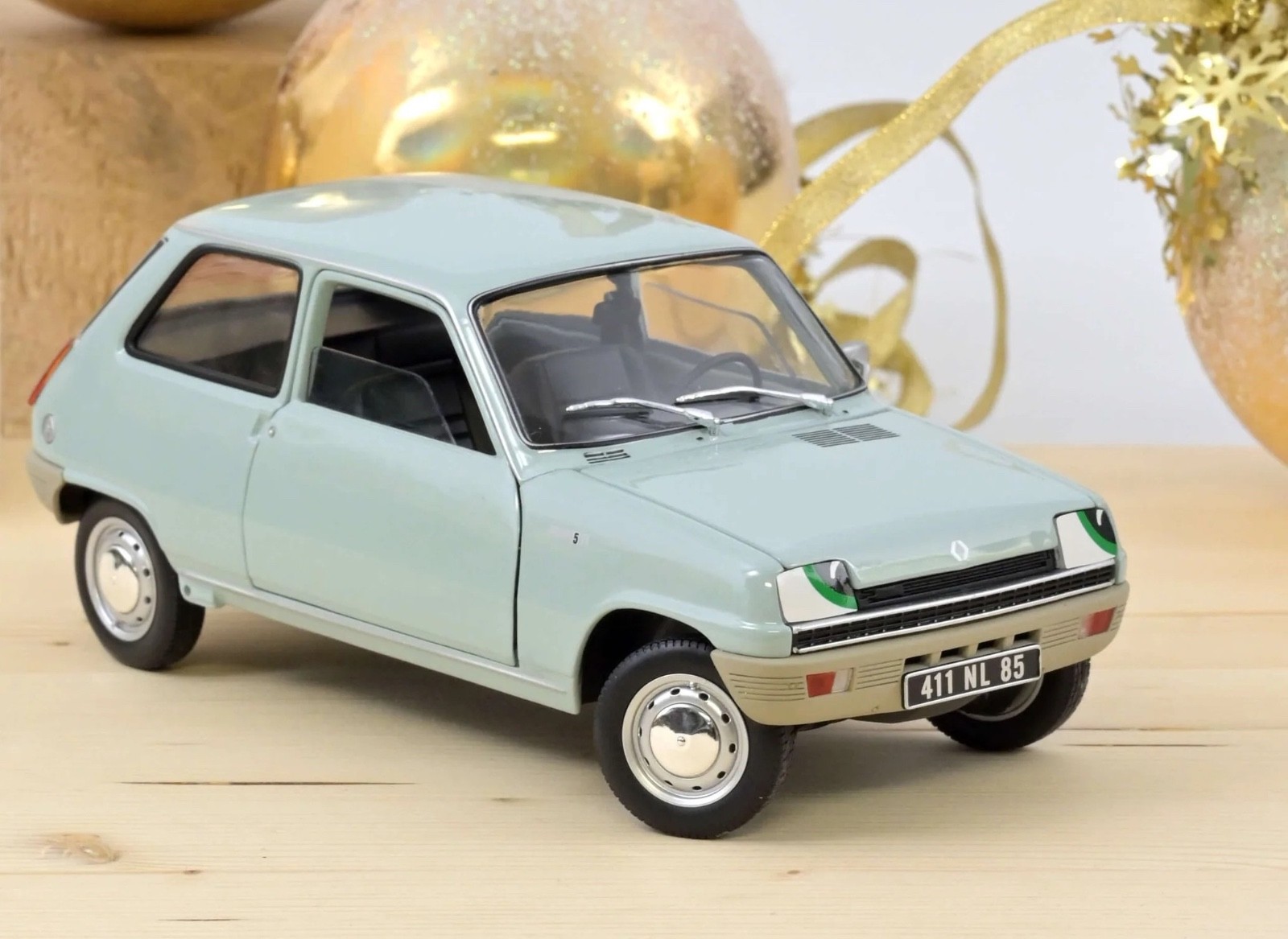
This charming NOREV 1/18 scale model recreates the original 1972 Renault 5 in delightful Clear Blue. The Renault 5 (pronounced "cinq" - French for "five") revolutionized the supermini segment when it launched in 1972, combining practical design, cheerful styling, and affordable pricing in a package that captured the spirit of 1970s France. With its distinctive three-door hatchback body, upright design, and playful character, the Renault 5 became one of Europe's best-selling cars and remains an icon of French automotive design.
The Renault 5 proved that small, economical cars could be stylish, fun, and desirable—a philosophy that influenced an entire generation of city cars.
Product Specifications
| Manufacturer |
NOREV (France) |
| Model |
Renault 5 (Renault Cinq) |
| Generation |
First Generation (1972-1985) |
| Year |
1972 |
| Scale |
1/18 |
| Color |
Clear Blue (Light Blue) |
| Product Code |
185380 |
| JAN Code |
3551091853800 |
| Material |
Diecast metal with detailed plastic components |
| Origin |
Shipped from Japan |
The Renault 5 - Revolutionary Supermini
The 1972 Renault 5 introduced groundbreaking concepts in small car design:
- Innovative Packaging – Maximized interior space within compact exterior dimensions through clever design and front-wheel drive layout
- Hatchback Practicality – Three-door hatchback body provided cargo versatility unusual in small cars of the era
- Cheerful Styling – Friendly, approachable design with characteristic upright proportions and large windows
- Affordable Quality – Offered Renault build standards and engineering at accessible prices for young buyers and urban drivers
- Cultural Icon – Became symbol of 1970s French lifestyle and modern urban mobility
1972 Launch Year
Launch Year
Supermini Pioneer
French Icon
City Car
1972 marked the introduction of the Renault 5, designed by Michel Boué. The car was an instant success, appealing to young buyers, urban professionals, and anyone seeking economical, practical transportation with personality. The design was fresh and modern, rejecting conservative small car conventions in favor of something more adventurous and stylish. Within months of launch, the Renault 5 had waiting lists stretching for months.
Model Features
- Accurate 1/18 scale reproduction of 1972 launch specifications
- Charming Clear Blue (light blue) period color
- Characteristic upright three-door hatchback body
- Distinctive front end with four round headlights
- Simple steel wheels with Renault hub caps
- Black plastic bumpers and trim (period specification)
- Large glass area providing excellent visibility
- Detailed interior with simple dashboard and seats
- Opening features including doors and hatch
- Realistic proportions capturing the car's friendly character
- Authentic French registration plate
Technical Specifications - 1972 Renault 5
- Engine: 782cc or 956cc inline-four (Cléon-Fonte)
- Power: 34-47 hp (depending on variant)
- Top Speed: 130-140 km/h (81-87 mph)
- Fuel Economy: Approximately 6-7 L/100km (excellent for era)
- Transmission: 4-speed manual
- Weight: Approximately 720 kg (1,587 lbs)
- Length: 3,505 mm (138 inches)
- Layout: Front-engine, front-wheel drive
Michel Boué's Design Vision
Designer Michel Boué created the Renault 5's distinctive appearance, though tragically he died before seeing his design's enormous success. His vision included:
- Vertical Design: Upright proportions maximized interior space and visibility
- Large Glass Area: Extensive windows created airy, open feel
- Friendly Face: Four round headlights gave the car approachable character
- Practical Hatchback: Three-door design with fold-down rear seat
- Simple Surfaces: Clean, unfussy bodywork kept costs down while looking modern
The design influenced an entire generation of small cars and remains instantly recognizable today.
Clear Blue - 1970s Color Palette
The Clear Blue (light blue) color represented the optimistic, cheerful aesthetic of early 1970s automotive design. This particular shade:
- Conveyed freshness and modernity appropriate for a revolutionary new car
- Was popular among young buyers who wanted something different from conservative colors
- Complemented the car's friendly, approachable character
- Reflected 1970s fashion and design trends toward brighter, lighter colors
- Made the small car feel less utilitarian and more stylish
Revolutionary Packaging
The Renault 5's space efficiency was remarkable for its era:
- Front-Wheel Drive: Eliminated transmission tunnel, freeing floor space
- Upright Design: Vertical orientation maximized headroom and usable interior volume
- Minimal Overhangs: Short front and rear overhangs maximized wheelbase within compact length
- Hatchback Versatility: Fold-down rear seat created surprising cargo capacity
- Tall Seating Position: High seats provided commanding view unusual in small cars
Cultural Phenomenon - "Le Car"
The Renault 5 became more than transportation—it was a cultural statement:
- Youth Appeal: Became the car of choice for young, urban Europeans
- Women Buyers: Appealed strongly to female buyers with its friendly styling and easy maneuverability
- City Living: Perfect for narrow European streets and limited parking spaces
- American Export: Sold in USA as "Le Car" (1976-1983), introducing Americans to European supermini concept
Sales Success & Impact
The Renault 5 achieved remarkable commercial success:
- Over 5.5 million first-generation units produced (1972-1985)
- Consistently among Europe's best-selling cars throughout 1970s and early 1980s
- Sparked entire supermini segment expansion with numerous competitors
- Proved that small, economical cars could be desirable and profitable
- Established template for successful city car design
Evolution & Special Variants
The Renault 5 spawned numerous variants during its production run:
- Alpine/Gordini: Performance versions with sporting character
- Turbo: Mid-engined, rear-wheel-drive homologation special (1980s)
- Diesel: Economy-focused variants for commercial users
- Electric: Early electric vehicle experiments
- Special Editions: Countless limited editions and trim levels
1970s European Context
The Renault 5's 1972 launch came at a pivotal moment:
- Oil Crisis: 1973 oil crisis made economical small cars suddenly desirable
- Urban Growth: European city centers becoming more congested, favoring small cars
- Youth Market: Post-war baby boom generation reaching car-buying age
- Modern Mobility: Changing attitudes toward transportation and urban living
The Renault 5 arrived at exactly the right moment to capture these social and economic shifts.
Legacy & Influence
The Renault 5's influence extended far beyond its sales success:
- Established the modern supermini segment that remains crucial to European market
- Proved small cars could have character and style, not just utility
- Inspired competitors including Volkswagen Polo, Ford Fiesta, and Fiat Uno
- Demonstrated that French design could lead global automotive trends
- Remains beloved classic, with enthusiast clubs and strong collector interest
Collector's Appeal
This model is essential for collectors of:
- Renault 5 heritage and history
- 1970s European automotive design
- Supermini segment pioneers
- French automotive icons
- City car evolution
- Period light blue color schemes
- Revolutionary small car design
- Premium 1/18 scale European classics
About NOREV
Founded in 1946 in Lyon, France, NOREV has earned its reputation as one of Europe's premier diecast model manufacturers. As a French company, NOREV takes particular pride in reproducing iconic Renault models. Their Renault 5 reproductions are celebrated for faithful representation of Michel Boué's friendly, upright design, authentic period colors including Clear Blue, accurate proportions capturing the car's cheerful character, detailed period-correct features, and faithful reproduction of the car that revolutionized European small car design.
Authenticity Guarantee
Genuine NOREV Product from Japan
This is an authentic NOREV diecast model with original Japanese market packaging and verified JAN code. We guarantee the legitimacy of all products in our collection.